Design Assurance & Safeguard Intelligence
One platform for the document-heavy side of process safety. It reads relief-valve datasheets, P&IDs, change packages and vendor bids, checks them against the required specification, and hands engineers review-ready Excel.
Role: lead developer, built with the process engineering team.
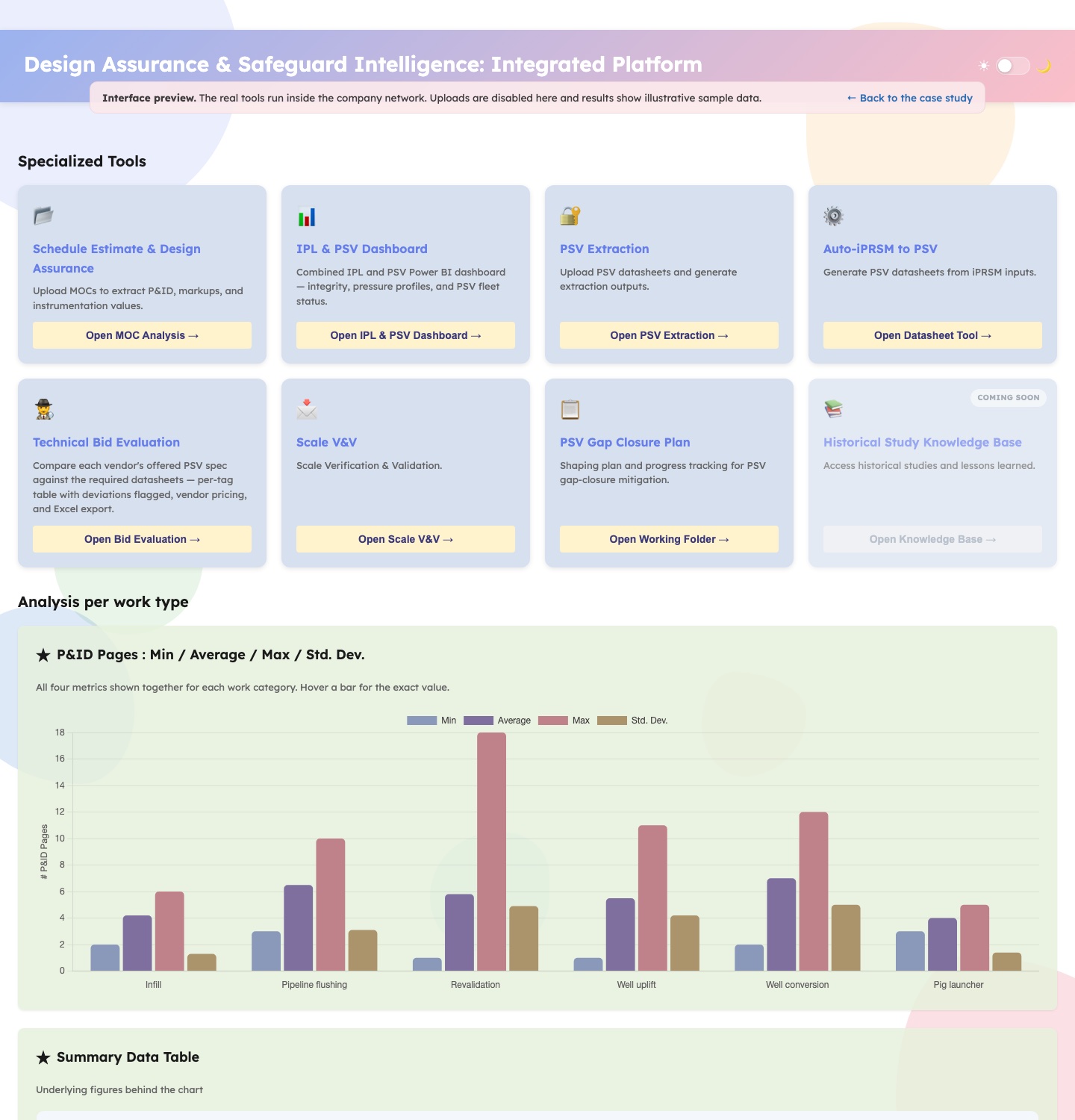
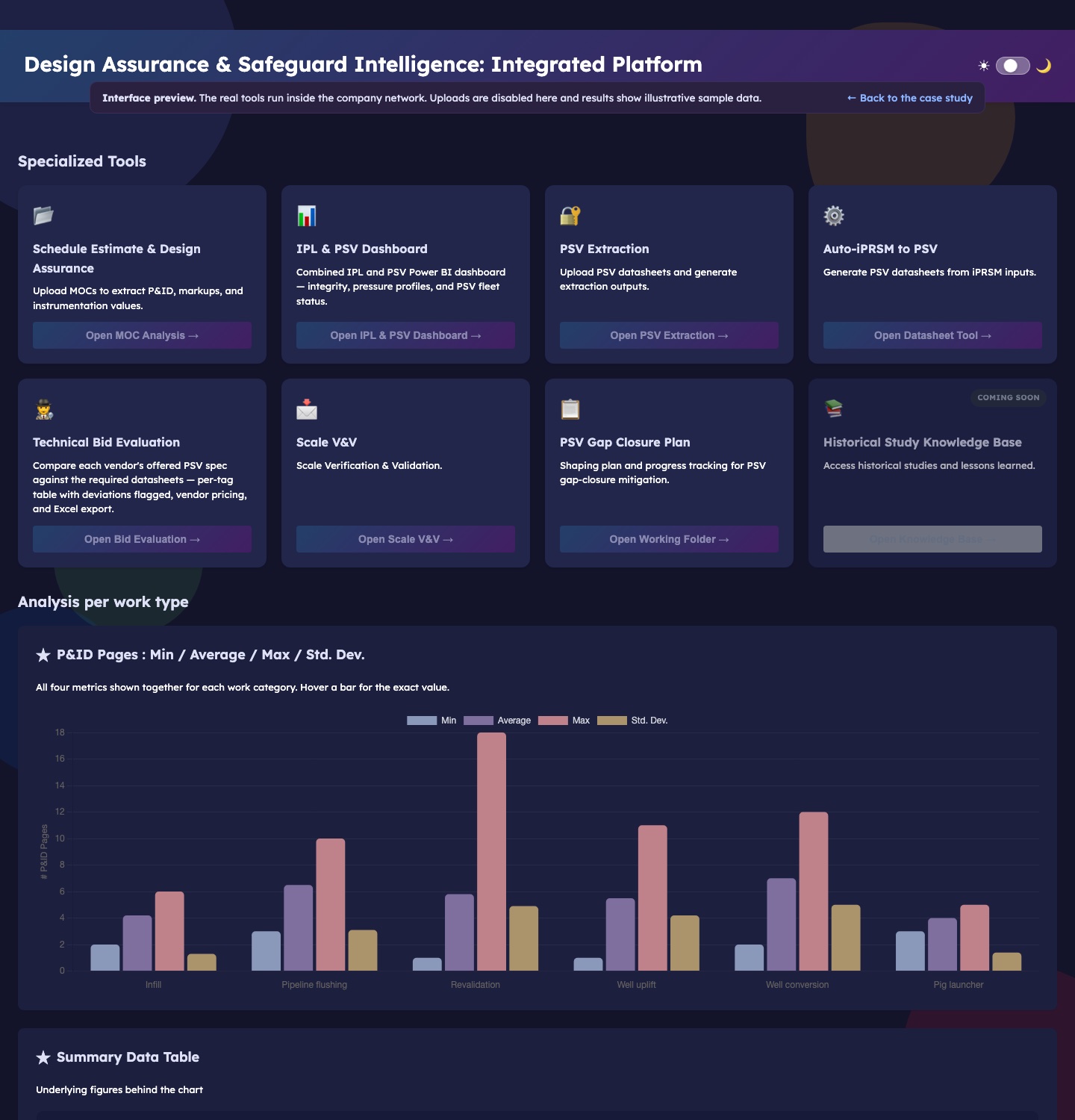
Screens from a sanitised, static preview of the real interface. The live tools run inside the company network, so uploads are disabled and the numbers are illustrative.
Specialized tools
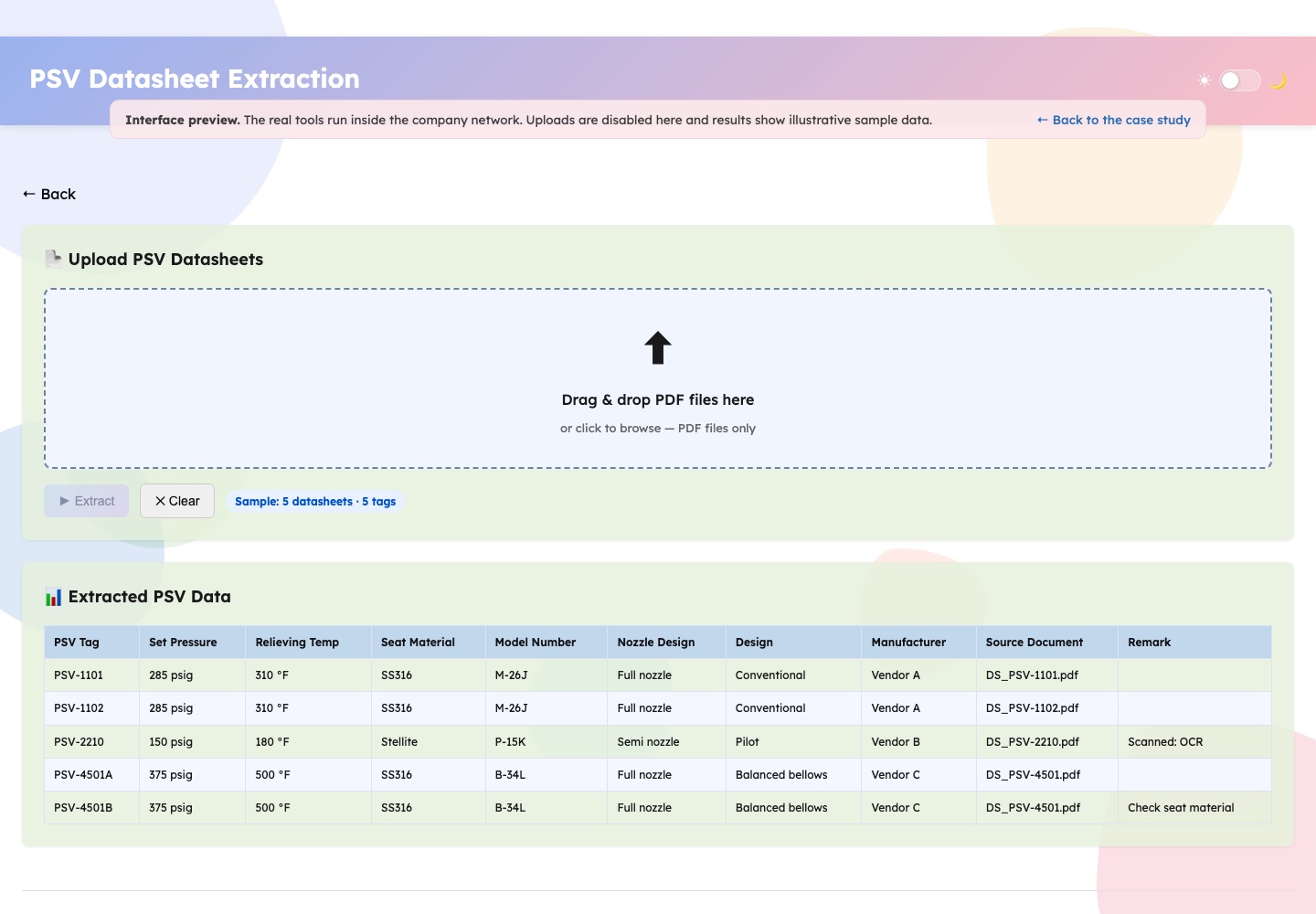
PSV Extraction
Reads relief-valve datasheets, including scanned PDFs, and returns one clean row per tag, ready for Excel.
Open preview →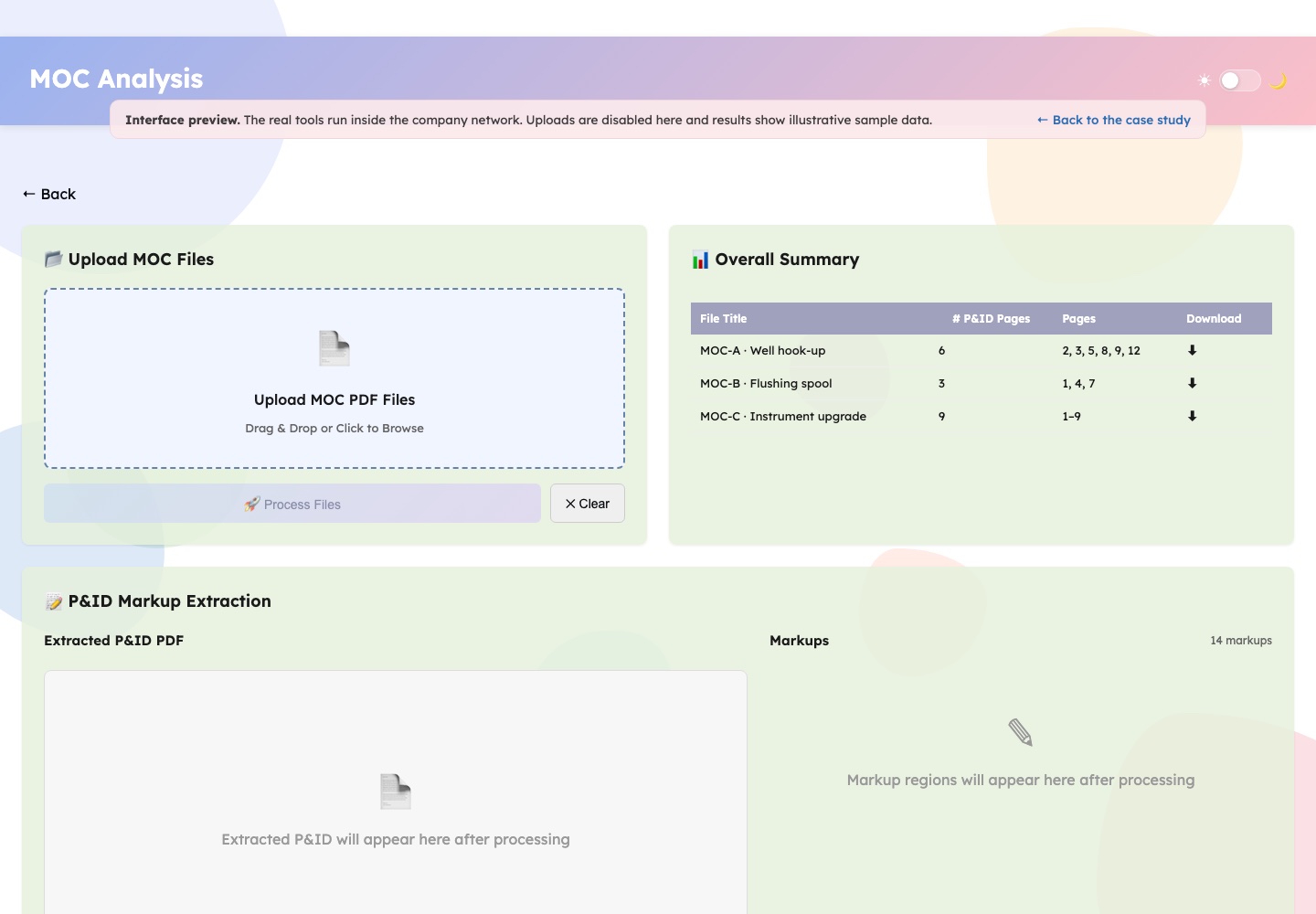
MOC Analysis
Finds the P&ID pages a change package affects, crops the clouded markups and pulls out instrument values.
Open preview →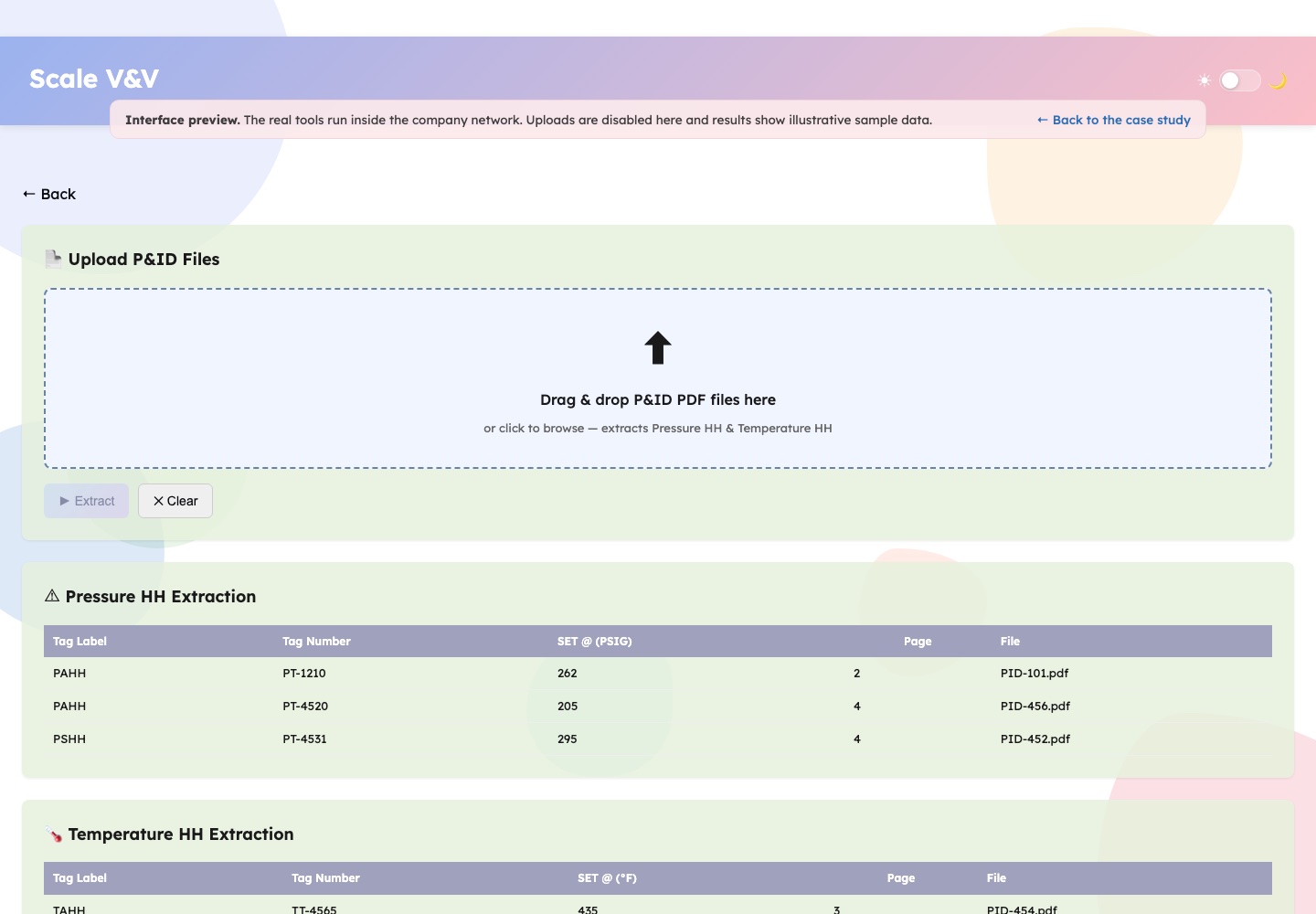
Scale V&V
Extracts PAHH, TAHH and HH set points from drawings and checks them against design limits.
Open preview →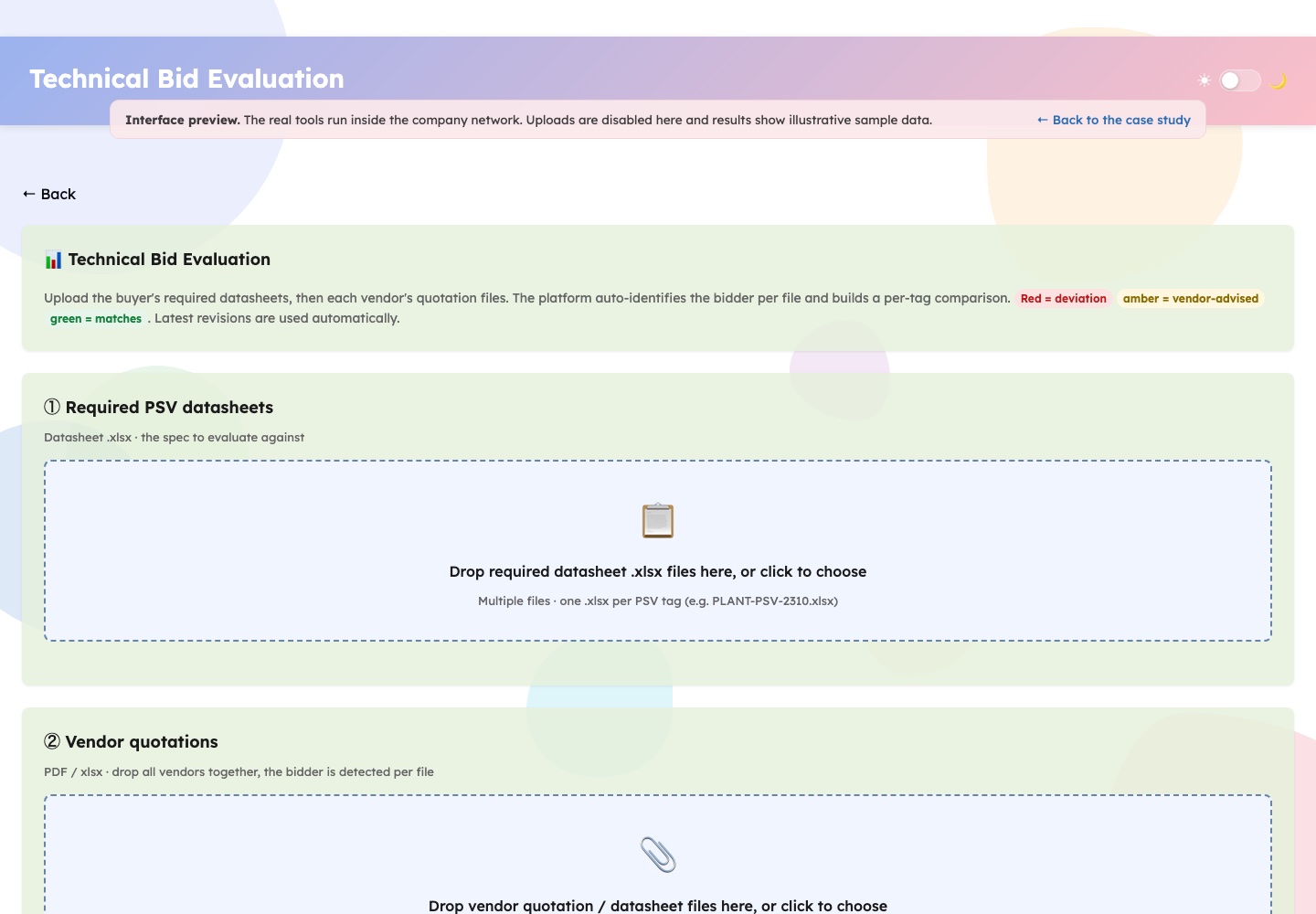
Technical Bid Evaluation
Compares each vendor's offered valve spec with the required datasheets, flags deviations and exports the table.
Open preview →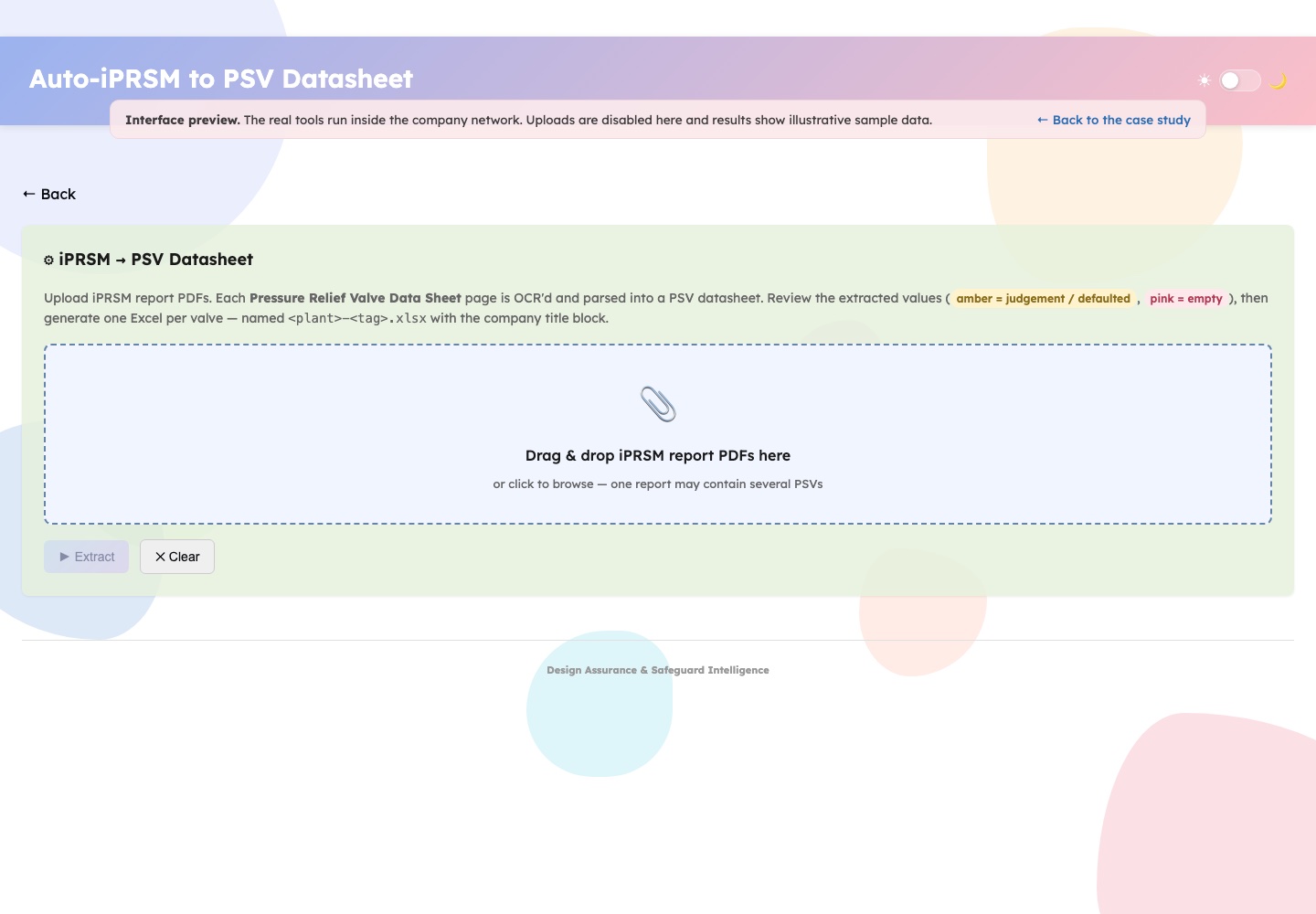
Auto-iPRSM to PSV
Turns relief-sizing exports into filled datasheet templates, one workbook per valve.
Open preview →The problem
Relief-system assurance across thousands of valves runs on documents: datasheets, sizing reports, P&IDs and vendor offers in many formats, often scanned. Checking them by hand is slow and repetitive, and the same values get re-typed into several spreadsheets, where mistakes creep in.
What I built
A single web platform with one tool per recurring task. Engineers upload documents, the tools extract and cross-check the values, and they download a review-ready workbook. Every output is checked by an engineer before it is used.
How it works
- 01UploadPDF datasheets, P&IDs, MOC packages, vendor bids
- 02ReadText layer first, then OCR for scanned pages
- 03ParseFormat detection, label matching, fuzzy tag matching
- 04CheckAgainst the required spec and limits; deviations flagged
- 05OutputExcel workbooks and cropped markups for engineer review
Built with
Related papers
Limits & next steps
- Runs inside the company network on internal documents, so the public version is a static preview.
- OCR quality follows scan quality. Low-confidence fields are flagged for the engineer rather than guessed.
- Next: a historical study knowledge base, and task checklists so lessons from past reviews feed new ones.